








The art of scent, an interview with illustrator GiacoMina Ferrillo
In creating a fragrance, few things inspire like the scents found in nature. It turns out that’s true when it comes to illustrating a fragrance, too — for the artist GiacoMina Ferrillo, flora is an eternal muse.
“By examining a flower and its tiny details, we get closer to that perfection and magnificence that is in everything around us,”
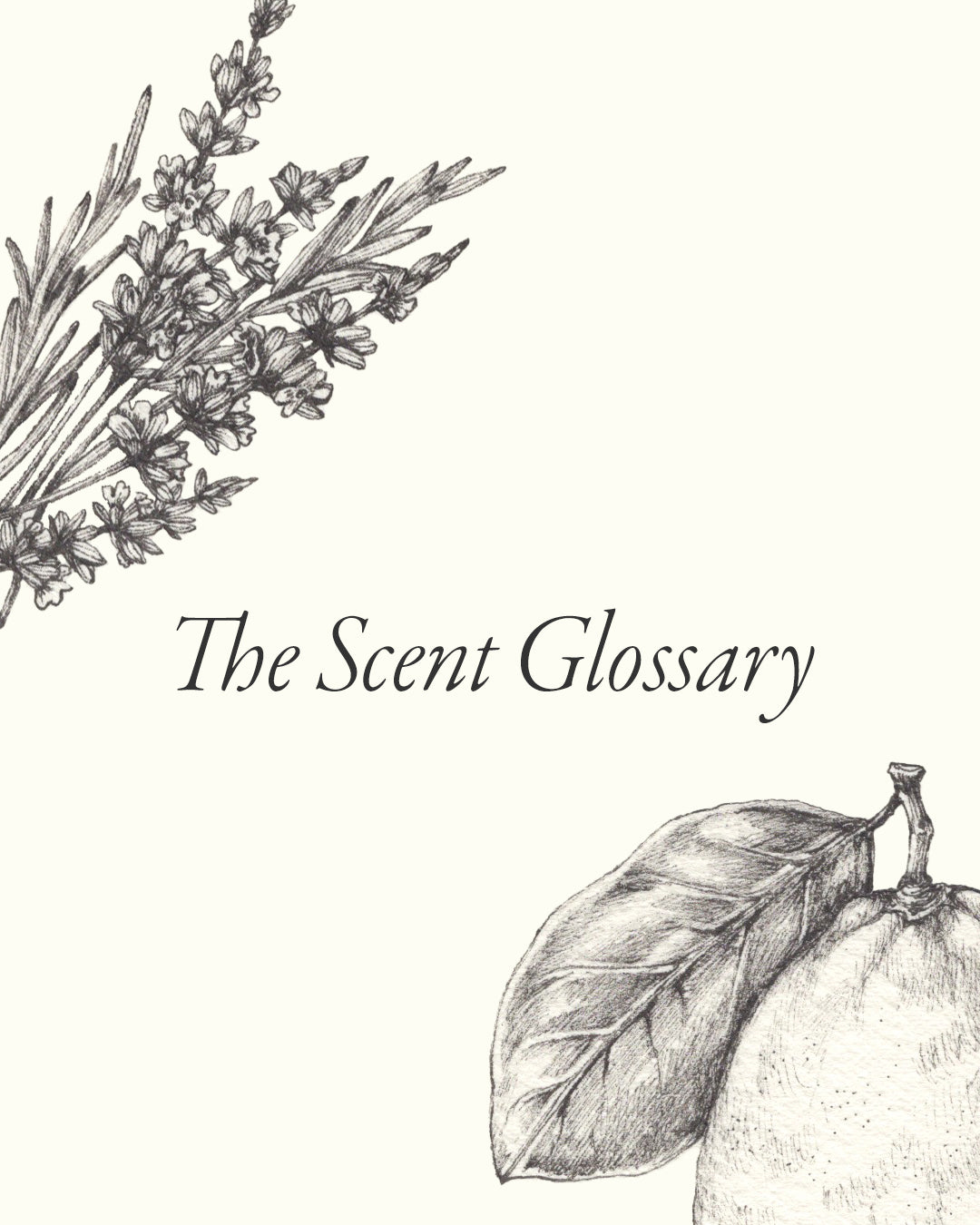
With her work, she has beautifully brought to life the botanical notes that give Antica Farmacista’s scents their own form of magnificence. Explore GiacoMina's beautiful illustrations in the scent glossary.
We wanted to learn more about her life and career, which has also included publishing ten children’s books in her native Italian and multiple solo exhibitions of her art. (She’s also a member of the American Society of Botanical Artists.) Learn more about her through a conversation between Ferrillo and Paul L. Underwood, writer and editor.
When looking at a blank page, where and how do you begin?
Botanical art isn't just an artistic discipline; it's closely tied to science. When drawing a subject, you must respect its true appearance so it can be properly identified. Adhering to this approach, even when working on nonscientific commissions, I begin with research. I observe and sketch, doing color tests if requested, to better understand the plant, and then produce a final drawing.
When you look at the way a stem tilts or how a petal curves, what are you looking for beyond accuracy? How do you capture the character of your subjects?
It's precisely details like the ones you mentioned that most attract me to a subject and define its character. I love portraying the "poetry" of natural forms, the way they unfold in space, the imperfections, the small details that make them unique. I try to portray a flower as if it were a person.
How did you land on your style? When did you know this is what you wanted to do?
I've worked as a set designer and interior designer, in advertising, and in publishing. I published several children's books as an author and illustrator before discovering and falling in love with botanical art. In this field, my style has been shaped by my background and experience. Some people find my ink drawings similar to engravings. My first art degree was in this discipline. My sketchbook pages often include geometric digressions or imaginative associations of shapes, and this certainly stems from my degree in scenography and my children's illustrations. It's impossible to separate ourselves from what we've learned, and I believe that's precisely what makes our style recognizable.
What inspires you? How do you decide what to create?
The strength and dignity of nature in embracing the cycle of life and the wonder of the perpetuation of the seasons are always a great inspiration, regard to botanical art. I also love decaying specimens, when the forms become sculptural and graceful. For new projects, I obviously spend time in nature, walking and searching for subjects that fascinate me. In general, I draw inspiration from museums. In a museum, you never stop learning or keeping inspiration and new ideas alive. They are sanctuaries for me; creative energy is breathable in a museum. You always leave feeling energized, whether you like it or not. I'm avid for books, another inexhaustible source of nourishment for the imagination.
Rick Rubin describes the creative act as being like gardening, where you have to decide what to cultivate and what to let go. Does that metaphor ring true to you? And as a person who works with plant life, how do you decide what to nurture and tend to?
Of course it does! And I really like that you quote Rubin. As creatives, there are many weeds to eradicate: the severity with ourself that sometimes prejudices spontaneity, to the point of almost killing expression. Fearing other people's judgment, being inconstant and never feeling up to it, are invasive and overbearing plants in the garden of creativity. Metaphor doesn't work for me as a botanical artist though. I love wild plants, spontaneous flora, I love many of what are considered "weeds"! I'm not a good gardener. I fall in love with them and don't uproot them. Even drawing dry branches is not very common or popular in botanical art. Let's say that the weeds I try to pull out in my work as a botanical artist are just the subjects I don't believe in, who don't capture my curiosity, even at the cost of being unpopular.
To capture plants and flowers as you do requires a lot of attention to detail, and also a real passion and love for your subject matter. Where do all those attributes come from?
I believe everyone has enormous talents; the difference lies in being able to discover them and, even more, cultivate them. The pleasure of observing and understanding, curiosity, and a desire to learn are essential prerequisites in botanical art. I love studying, trying to understand what's in front of me, and faithfully reproducing it, is for me a form of respect.
Where and when do you prefer to work? Does this space have a scent? Do you try to influence or manipulate that at all, or is that its natural smell?
In the morning, my breakfast is dedicated to drawing in my botanical sketchbook. I must say I can't associate this moment with any other scent than that of my cappuccino, sometimes the cinnamon I add to the foam. It's a ritual for me. The workday begins at my desk in the late morning, in my studio. I can continue until very late in the evening. Sometimes I draw outdoors if the weather permits. I can work anywhere, but I need to transform foreign places into something mine, even if only for a short time. The studio is a sacred place for me; my desk is a "complicit" and friendly place in my creative process. My studio often smells of dried leaves, resin, or fresh flowers for obvious reasons.
How long does it take you to complete a work, from concept to finished product?
This depends on the size of the work and the technique you intend to use. Very complex subjects require many hours of work, and botanical art generally requires long sessions. Watercolors require numerous overlapping layers of color, and the details can be truly minute. Commissioned works always have a deadline, so the workload can become overwhelming.
Fragrance is invisible, yet deeply emotional and memory provoking. When illustrating fragrance notes, how do you begin translating them into something tangible? How do you represent the feelings they evoke?
Olfactory memory is the most powerful memory, and it's not easy to evoke olfactory sensations through drawing, but what I would call "sources" can be helpful. Drawing a flower can immediately bring to mind its intense scent; it's an association that arises spontaneously. Even more so if that flower is associated with a situation we've experienced.
What emotion do you hope someone feels when they see your illustration accompanying a fragrance in their home?
I sincerely hope that the delicious aroma combined with the pleasing image can contribute to a highly enjoyable experience. A multi-layered experience, where even the packaging can contribute to the quality of the product.
If your artistic style had a scent profile, how would you describe it?
Is it obvious to say floral? I'm kidding. If I take the style of my sketchbooks as an example, and my use of rough paper instead of smooth paper for ink drawings, I'd say it could be intense, with floral and woody notes, but also spicy.

Lightning round: What scent reminds you of childhood?
Jasmine, roses, and lemons from my father's beloved garden. And chocolate.
What scent reminds you of falling in love?
The unmistakable scent of the wooden boards of a stage.
What scent reminds you of a loved one?
Violet, sandalwood and vanilla.
What scent reminds you of home?
Lavender and basil.
What scent did you wear growing up? What about now?
Scented talcum powder. Now my favorite fragrances always have a hint of anise, a scent I adore. They're light but complex, fresh.
Explore Giacomina's illustrations in the Scent Glossary, a visual index of the storied origins of Antica Farmacista's fragrance collection.